White Nights by Fyodor Dostoevsky

The dreamer and Nastenka’s monologues are long, which makes them hard to take in, and I did not love it for the plot, either. What I appreciate instead is how beautifully the book captures the rarity of a connection like the one they share. It’s touching to meet someone at the exact moment you need them, and to realize they need you just as much at that moment. To be there for each other in a way that allows openness, vulnerability, and acceptance. There’s something tender about meeting night after night in the same place where you first crossed paths. You wait for each other. You talk. You simply exist together in that small pocket of time. And when it ends, it ends exactly when it’s supposed to. It is an encounter not meant to stand the test of time, but one that is necessary in the grand scheme of things.
I Who Have Never Known Men by Jacqueline Harpman
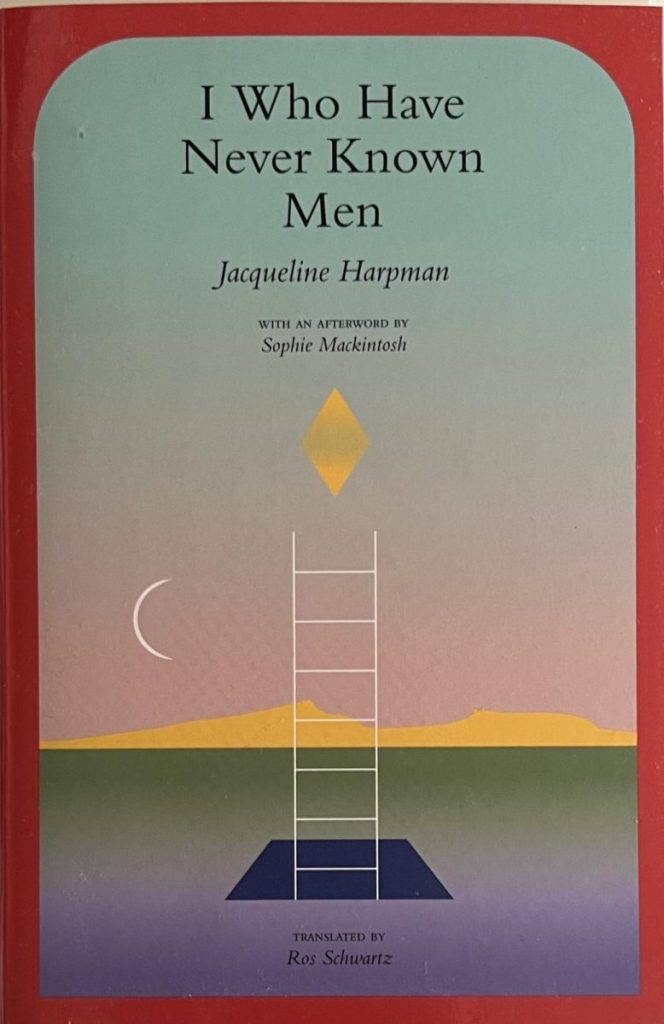
I couldn’t help but keep turning one page after another. I’ve always been drawn to books that invite philosophical reflection, and this book does exactly that. What I particularly appreciated is how the novel refuses to explain why everything happened or what the world once was. I understand this may not appeal to everyone; however, it worked well for me. The questions lingered with me from beginning to end, and every time I thought an answer was finally coming, the story would take a different turn—like hope being extinguished just as it starts to breathe, much like what the women themselves experienced in a land stripped of promise and future.
In many stories, such questions and mysteries would eventually be answered, but here they remain unresolved. The narrative feels suspended in uncertainty, yet that suspension seems intentional. I suppose the absence of explanation is precisely what gives the novel its philosophical weight.
I also admire the irony the book reveals in the narrator’s final moments: to be dying from a diseased womb, never having had periods, and never having known men. It carries a symbolic weight that the very organ associated with life and its continuity, becomes the source of her suffering and death.
She and Her Cat by Makoto Shinkai

She and Her Cat is an easy, refreshing read that you can finish in one sitting, yet it leaves you with striking lessons through the lives of its four women and their feline companions. You’ll probably find yourself smiling and awash with “the feels” by the end.
I think Makoto Shinkai has a gift for capturing the contradictions of human emotion. Through this book, he reminds us that love, loneliness, hope, and grief often exist side by side.
One lesson that stayed with me is this: we often think we’re the ones rescuing our pets, but that’s only partly true. More often than not, they end up rescuing us, too. They become a familiar presence when everything else feels uncertain. In the middle of life’s constant changes, they offer warm companionship and a sanctuary. They fill the empty corners of our busy lives.
Perhaps that’s why saying goodbye to them hurts so deeply. They become part of the rhythm of our days, and when they’re gone, the space they leave behind cannot be ignored.
Veronika Decides To Die by Paolo Coelho
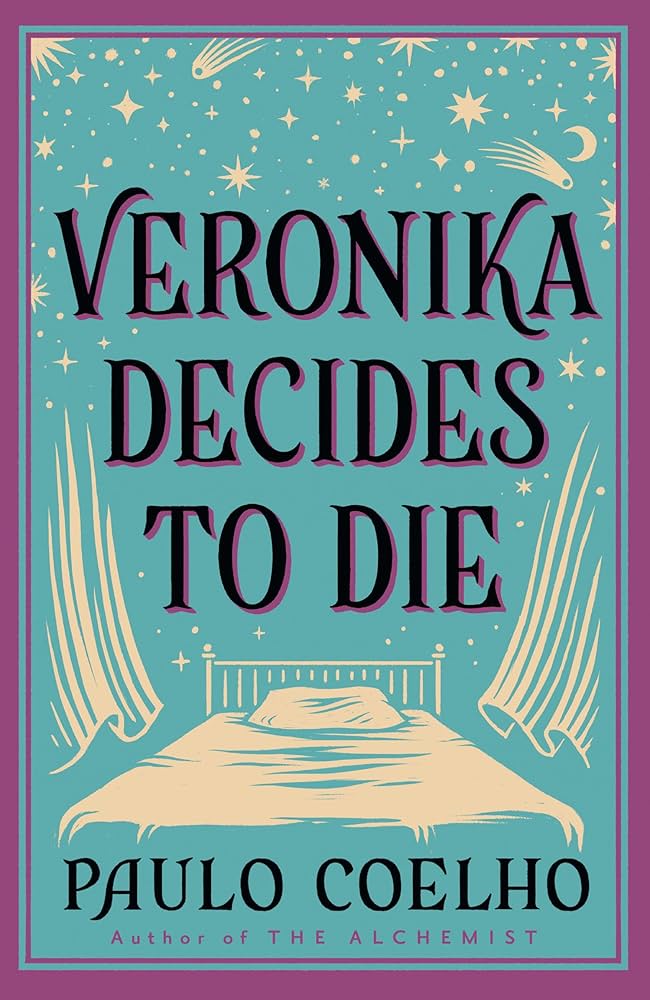
Life is experienced when we have the audacity to live bravely and embrace a little madness, even if it means going against society’s invisible rules. Let it be on our own terms. I think that’s my biggest takeaway from this book.
It also made me wonder if some of our self-destructive tendencies come from the simple fact that we haven’t really figured out what it means to live.
And then there’s the line I’ll never forget:
“All of us, one way or another, are insane.”
Maybe that’s the point. We all carry some insanity within us. The question is whether we’ll let it destroy us, or whether we’ll have the courage to let it lead us toward a life that is truly our own.
The Picture of Dorian Gray by Oscar Wilde
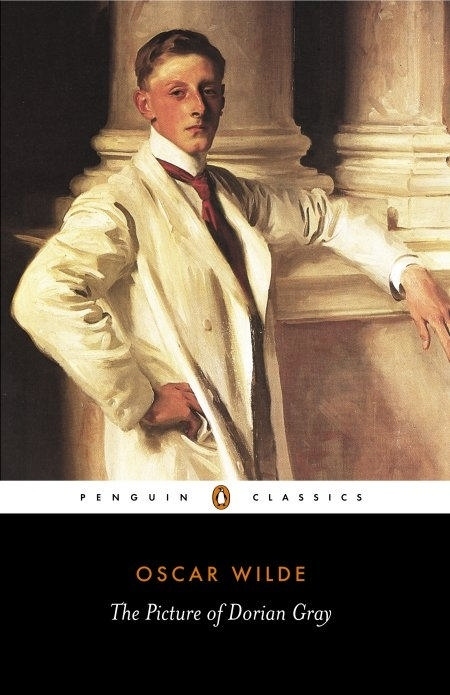
When the writer anticipated the controversies his book would provoke, he preempted them with a preface of profound philosophical insight.
The artist is the creator of beautiful things. To reveal art and conceal the artist is art’s aim. The critic is he who can translate into another manner or a new material his impression of beautiful things. The highest as the lowest form of criticism is a mode of autobiography. Those who find ugly meanings in beautiful things are corrupt without being charming. This is a fault. Those who find beautiful meanings in beautiful things are the cultivated. For these there is hope. They are the elect to whom beautiful things mean only Beauty. There is no such thing as a moral or an immoral book. Books are well written, or badly written. That is all. The nineteenth century dislike of Realism is the rage of Caliban seeing his own face in a glass. The nineteenth century dislike of Romanticism is the rage of Caliban not seeing his own face in a glass. The moral life of man forms part of the subject-matter of the artist, but the morality of art consists in the perfect use of an imperfect medium. No artist desires to prove anything. Even things that are true can be proved. No artist has ethical sympathies. An ethical sympathy in an artist is an unpardonable mannerism of style. No artist is ever morbid. The artist can express everything. Thought and language are to the artist instruments of an art. Vice and virtue are to the artist materials for an art. From the point of view of form, the type of all the arts is the art of the musician. From the point of view of feeling, the actor’s craft is the type. All art is at once surface and symbol. Those who go beneath the surface do so at their peril. Those who read the symbol do so at their peril. It is the spectator, and not life, that art really mirrors. Diversity of opinion about a work of art shows that the work is new, complex, and vital. When critics disagree, the artist is in accord with himself. We can forgive a man for making a useful thing as long as he does not admire it. The only excuse for making a useless thing is that one admires it intensely. All art is quite useless.
While I enjoyed reading the book in its entirety, I found the preface particularly interesting because it gave me a better sense of how Wilde approached art, criticism, and the novel itself.
Of all his assertions, the one that stayed with me most was: “It is the spectator, and not life, that art really mirrors.” It made me think about how our response to art is never entirely separate from ourselves. What we see in a work, what we take from it, and even what we choose to focus on can reveal something about the person doing the looking.
I think this idea can extend beyond art as well. When we spend considerable effort criticizing another person, what we say can reveal as much about ourselves as it does about the person we are judging. The things we choose to condemn, exaggerate, or fixate on may expose our own insecurities, desires, resentments, or even our need to justify ourselves. The person being criticized becomes, in a sense, a mirror. We may believe we are describing someone else, but in the process, we inevitably reveal something of ourselves.
I think there is a difference between criticizing something someone did and trying to explain who that person is as a whole-assigning motives to them, reducing their behavior to certain psychological patterns, or treating their actions as proof of some deeper flaw in their character. Sometimes, it goes even further, where a person is reduced to assumptions about them-their supposed grief, attachment style, need for validation, feminism, hypocrisy, or inability to regulate their emotions-as though these interpretations were established facts and could explain everything about who they are. At that point, the criticism is no longer simply about what someone did. It becomes an entire narrative built around what the critic believes must be happening beneath the surface. Their worst qualities are taken out of context and turned into ammunition, while the person doing the criticizing places themselves in the position of being the more reasonable, self-aware, or morally sound one.
And I think that is where criticism starts to become interesting, because it can tell us something beyond the person being criticized. What we choose to notice, what we keep coming back to, and the meaning we give to someone else’s actions are all shaped by our own perspective. Maybe that is what Wilde means when he calls criticism a form of autobiography. In trying to make sense of another person, we inevitably reveal something about ourselves too. The person we think we are examining can become a mirror, and not everything we see in it necessarily belongs to them.

